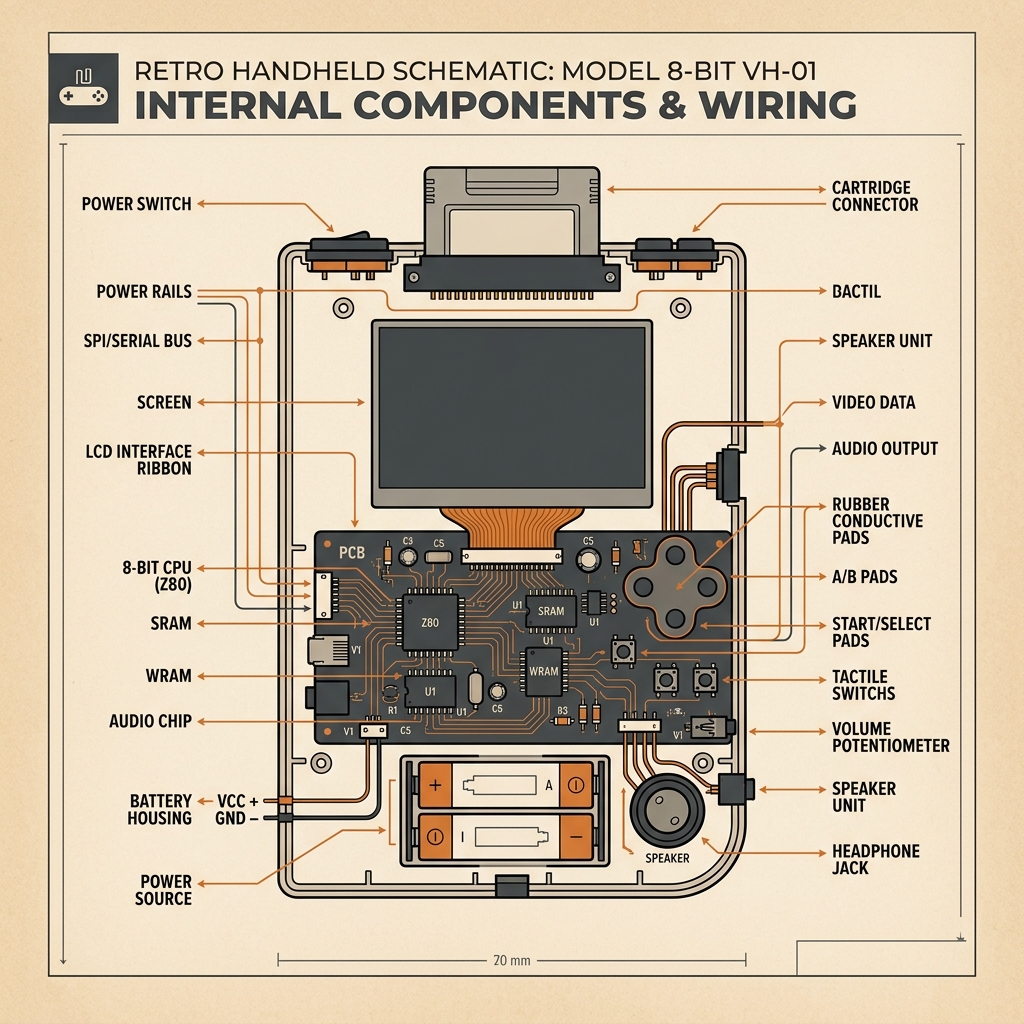
A documentation log studying classic hardware limits, and profiling the technical layouts of modern independent creations.
Early portable devices ran on custom 8-bit microprocessors with clock rates below 4 MHz. Developers had to optimize RAM buffers down to bytes, utilizing custom scrolling chips and tile register locks to draw sprites without flickering.
Our archive maps show how modern indie designers replicate these limitations, building custom retro systems using contemporary coding practices.
Browse ArchivesUnpacking the pixel art render pipelines, dynamic lighting grids, and turn-based timing code in Sabotage Studio's RPG project.
A study in non-verbal level layouts. How the map guides players through sequence breaks, door gates, and zone keys.
How Yacht Club Games designed an authentic NES feel while incorporating modern widescreen rendering and solid collision mechanics.
Analyzing the active-time battle system. How the game controls character coordinates and attack alignments in real-time.